


Program Overview
The University of Alabama offers students and busy professionals the ability to earn a Doctor of Education in Educational Leadership in a fully online format. Upon completion, our graduates are equipped with an expanded skill set to lead their schools and organizations to promote effective and inclusive learning environments.
Online Program Format
69 Credit Hours
$480 Tuition Per Hour
Equip Yourself for the Highest Level of Educational Leadership
Designed by expert faculty members, this program will provide you the opportunity to develop knowledge and skills needed to function as scholarly, ethical and reflective decision-maker in the areas of executive management, educational leadership and policy. This program is tailored to accommodate your schedule as a full-time working professional.
Our alumni are in leadership positions as assistant principals, principals, supervisors, assistant superintendents, superintendents and state-level personnel as well as serving in district offices, community centers and policy organizations. The degree program is offered in an online format with some synchronous virtual class meetings, which are facilitated by faculty for all to participate in engaging and collaborative discussions.
| Application Deadline | March 1 |
| Application Priority Deadline | Priority deadline: Nov 3; Final deadline: March 1 |
| Fees | $10 College of Education graduate fee (per credit hour) |
| Required For Entrance | Master's Degree |
| Scholarships and Grants Available | Discover a range of scholarships and grants to support your educational journey |
| Why Working Teachers and Education Professionals Choose UA Online | Learn how UA Online provides pathways for others like you to pursue excellence through flexible, affordable graduate programs |
Curriculum
Prerequisites
Prior to admission, applicants must provide evidence that they have completed a course in the following areas:
- Special Education Course – Applicants must have taken a special education with a grade of B or better.
- Graduate Level Statistics Research Course – If students have not taken BER 540 Quantitative Methods I (Introduction to Statistical Methods) or an acceptable preapproved master’s level equivalent within the last four years with a grade of B or better, then students are required to complete this course before beginning the 12-hour research requirement.
Courses for the program are offered in an online format that includes required, synchronous weekend or evening meetings and asynchronous learning activities. Students can anticipate completing two courses together with their cohort members each semester, with a commitment of four weekend virtual meetings that include instructional time for each course. Class meeting dates and times will be designated on myBama.
A minimum of 69 credit hours beyond the master’s degree is required for completion of the EdD program. Please note that courses are subject to change.
Depending on coursework prior to admission to the EdD program, prerequisites for more advanced study in educational leadership may be required.
Required Courses
Educational Leadership (AEL) Core (15 hours)
- AEL 619 Politics of Education
- AEL 650 Organizational Theory
- AEL 671 Survey of Instructional Supervision
- AEL 675 Advanced Organizational Theory
- AEL 682 Leadership and Organizations
Educational Leadership (AEL) Courses (21 hours)
- AEL 608 Educational Finance Theory and Practice
- AEL 611 Superintendency and the Leadership Team
- AEL 618 Advanced Educational Law
- AEL 630 School Partnerships
- AEL 661 Major Issues and Trends in Educational Leadership
- AEL 664 Educational Policy and the Dynamics of Change
- AEL 697 Seminar in Educational Leadership
Foundations Courses (9 hours)
- BEF 681 Ethics and Education
- BEF 642 Studies Philosophy Education
- BEF 695 Seminar in Curriculum Leadership
Research Courses (12 hours)
- BER 630 Qualitative Case Study Research Methods
- BER 631 Inquiry as Interpretation: Qualitative I
- BER 660 Evaluation I: Evaluation Theory and Practice
- BER 661 Evaluation 2: Improvement Science Methodologies
Dissertation (12 hours)
- AEL 699 Dissertation Research
- Students are eligible to register after passing the Doctoral Comprehensive Exam.
- Students must complete a minimum of 12 hours of dissertation research.
These charts highlight the key differences in purpose, career paths and focus between the PhD and EdD in Educational Leadership.
Degree and Program Features
| Category | PhD in Educational Leadership | EdD in Educational Leadership |
|---|---|---|
| Degree Type | Researcher degree | Practitioner degree |
| Primary Career Path | Faculty/researcher, policy analyst, consultant or policymaker | School administration (principals, superintendents) or educational leadership |
| Career Enhancement | Prepare to be a professor, researcher, educational leader, consultant, agency executive or policy analyst | Can qualify for higher education positions, though focused on leadership and administrative roles in K-12 |
| Focus of Degree | Creation and publication of new knowledge; emphasis on producing knowledge | Utilization of existing knowledge; emphasis on consuming and applying knowledge |
| Program Purpose | Prepare students for careers in academia, policy analysis, or research; emphasizes theoretical thinking and knowledge creation in leadership | Equip students with the skills to improve their knowledge as educational leaders, focusing on decision-making and problem-solving in practice |
| Student Development Orientation | Results-oriented and forward-looking mindset in examining cutting-edge research on school improvement and effective and innovative change | Become a highly competent scholar-leader at the school, district, or state level with a forward-thinking mindset. |
| Learning Orientation | Learn about research-informed leadership, organization capacity-building, strategic planning, political dynamics for social justice, transforming teaching and learning, innovative system improvement in equitable and progressive academic growth for all students | Acquire and apply knowledge of cutting-edge research-based and data-informed leadership for improving student learning and success |
| Format | Research team, project involvement, learning community; publication apprenticeship; weekday-night synchronized virtual class and asynchronized online learning | Cohort; network with school, district and state leaders; weekend, synchronized virtual class and asynchronized online learning |
Curriculum
| Category | PhD in Educational Leadership | EdD in Educational Leadership |
|---|---|---|
| Instructional Approach | Immersion in university research and teaching culture, focus on theoretical applications in educational leadership | Professional inquiry, reflection and application of leadership knowledge to address challenges in education |
| Key Areas of Study | Organizational theory, politics, policy analysis, school improvement, leadership development, dynamic change, research methods, technology, multicultural leadership, curriculum leadership | School and district leadership, school improvement, organizational theory, finance, policy evaluation, curriculum leadership, data-informed decision-making, public accountability, developing leaders and people, transforming teaching and learning, successful whole-system change, accountability, law and ethics of education, diversity and culture, action research, improvement science |
| Research and Publication Mentorship | Emphasized | Not emphasized |
| Local School Engagement | Not emphasized | Emphasized |
Program Requirement
| Category | PhD in Educational Leadership | EdD in Educational Leadership |
|---|---|---|
| Program Length | 66 credit hours | 69 credit hours |
| Research Coursework | 15 credit hours | 12 credit hours |
| Dissertation Coursework | 18 credit hours | 12 credit hours |
| Transfer Credit Allowance | Up to 21 hours from a UA-awarded EdS in Educational Leadership; review process available for non-UA EdS | Up to 27 hours from a UA-awarded EdS in Educational Leadership; review process available for non-UA EdS |
| Program Catalog Description | Prepares for a career in academia, policy analysis or consulting. Emphasizes theoretical thinking and developing knowledge in educational leadership. | Designed to meet the needs of educational leaders facing challenges like accountability, globalization, diversity and technology. Focused on leadership practice. |
| Dissertation Goal | Focus on the production of original research | Focus on addressing real-world problems in practice through inquiry and reflection |
| Dissertation Format | Typical dissertation formats (e.g., qualitative, quantitative, mixed method, meta-analysis); three-article format | A variety of formats through which students address practical problems faced by educational leaders (e.g., policy analysis, policy evaluation, systematic review, case study, improvement science-guided) |
Admission
| Category | PhD in Educational Leadership | EdD in Educational Leadership |
|---|---|---|
| Target Audience | Those seeking to contribute to academia or influence education policy through rigorous research | Educational practitioners aiming for higher leadership roles such as K-12 principals or superintendents, or those focused on solving practical issues |
| Ideal Candidate Experience | Education-related backgrounds (e.g., teaching, counseling, information science, research) | EdS degree in educational leadership and extensive school leadership experience |
Does the PhD sound like a better fit? Explore the PhD in Educational Leadership.
Admission
Admission to the Doctor of Education in Educational Leadership program is highly selective and requires the following:
- A master’s degree, earned prior to enrollment, from an accredited institution
- Three letters of professional and academic recommendation, including one from a current supervisor
- Approved, completed coursework in Special Education and graduate-level Statistics (Quantitative) Research course
- A Purpose, Rationale and Career Statement that addresses the following:
- The student’s rationale for applying to the EdD program
- A statement regarding career/professional goals
- A statement of how the student’s rationale and career goals are consistent with the purpose of the degree program as articulated by the department and program
- An academic or professional writing sample written by the applicant within the last year that provides evidence of the student’s writing ability
- Documented professional experience in teaching and/or leadership
- Current résumé
- Transcripts from all institutions attended
- Completed UA Graduate School application
Applicants may be considered for regular admission to a graduate program when they meet the minimum GPA requirement set by the Graduate School: an overall undergraduate GPA of 3.0 or higher on a 4.0 scale, or a 3.0 average GPA for the last 60 credit hours in a degree program, or a 3.0 or higher GPA in a completed graduate degree program.
This program does not lead to certification or licensure.
EdD Educational Leadership Application:
- Begin your graduate application through the UA Graduate School
- For “Program Type” select Distance (Online/Blended/Gadsden)
- For “Select degree type” use the drop-down menu to select Doctoral
- For “Select course of study” use the drop-down menu to select Educational Leadership EDD
- Note: Please ensure that you select the appropriate program name and degree type from the list.
- For the “Enter your area of focus, if applicable” text box, leave blank or type “None”
- For “Campus” select Distance Learning
- For “Entry Term” select Fall


Student Spotlight
Inspiring stories of success from students and alumni.
Take a look at some of our UA Online stories.
-
![Devoted Mother to Full-Time Special Ed Teacher | BA in Interdisciplinary Studies]()
Dawn Stephens
Devoted Mother
When Dawn Stephens determined it was time to finish her bachelor’s degree, she chose UA Online’s New College LifeTrack.
Read More : Devoted Mother to Full-Time Special Ed Teacher | BA in Interdisciplinary Studies -
![This Turtle Soars | MS in Marketing Analytics]()
Captain Ryan Jacobs
This Turtle Soars
A dedicated member of the United States Air Force who excels with honors wherever he lands.
Read More : This Turtle Soars | MS in Marketing Analytics -
![Q&A with Megan Brannan-Pierce | MA in Special Education – Gifted]()
Megan Brannan-Pierce
Q&A with Megan
We caught up with her to learn more about the exciting transformation of her career since graduation.
Read More : Q&A with Megan Brannan-Pierce | MA in Special Education – Gifted -
![Hunger and Heart | Redefining Leadership Through Education | Executive EdD in Higher Education Administration]()
William Jones
Hunger and Heart
UA Online student William Jones built a bridge from his Master of Science degree to pursue Higher Education Administration.
Read More : Hunger and Heart | Redefining Leadership Through Education | Executive EdD in Higher Education Administration -
![Building Her Best Legacy | EdS in Elementary Education]()
Janet Williams
Building Her Best Legacy
Janet Williams knew she could be an even better teacher to her fourth grade students.
Read More : Building Her Best Legacy | EdS in Elementary Education -
![Mastering Her Next Move | MA in Elementary Education]()
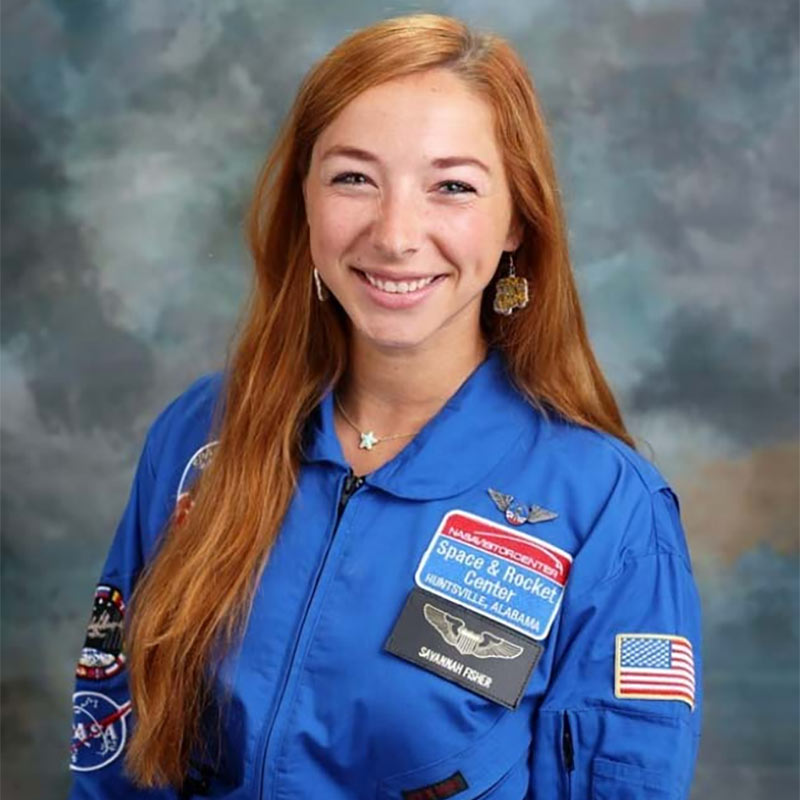
Savannah Fisher
Mastering Her Next Move
When Savannah Fisher was a busy undergraduate, she knew she’d soon be pursuing an MA in Elementary Education.
Read More : Mastering Her Next Move | MA in Elementary Education -
![Pursuing Excellence and Carrying It Forward | EdS in Educational Leadership]()
Noel Taylor
Pursuing Excellence
He embraced the academic rigor of his courses along with the camaraderie and companionship.
Read More : Pursuing Excellence and Carrying It Forward | EdS in Educational Leadership -
![Defining Her Passion, Delivering Compassion | MA in Higher Education Administration]()
McKinsey Poole Threlkeld
Defining Her Passion
McKinsey thought she was supposed to be a middle school classroom teacher, but the COVID-19 pandemic gave her the space to take a step back.
Read More : Defining Her Passion, Delivering Compassion | MA in Higher Education Administration -
![A Shared Journey of Success at UA Online]()
Matthew and Madison Barrett
Meet the Barretts
Matthew and Madison Barrett share their experiences as they balanced work, life and the pursuit of their graduate degrees with UA Online.
Read More : Meet the Barretts: A Shared Journey of Success at UA Online








Contact Us
Program Information
Hannah Homan
Admissions Representative 800-467-0227
hannahh.bama@ua.edu
Admissions Information
UA Online
800-467-0227
online@ua.edu